
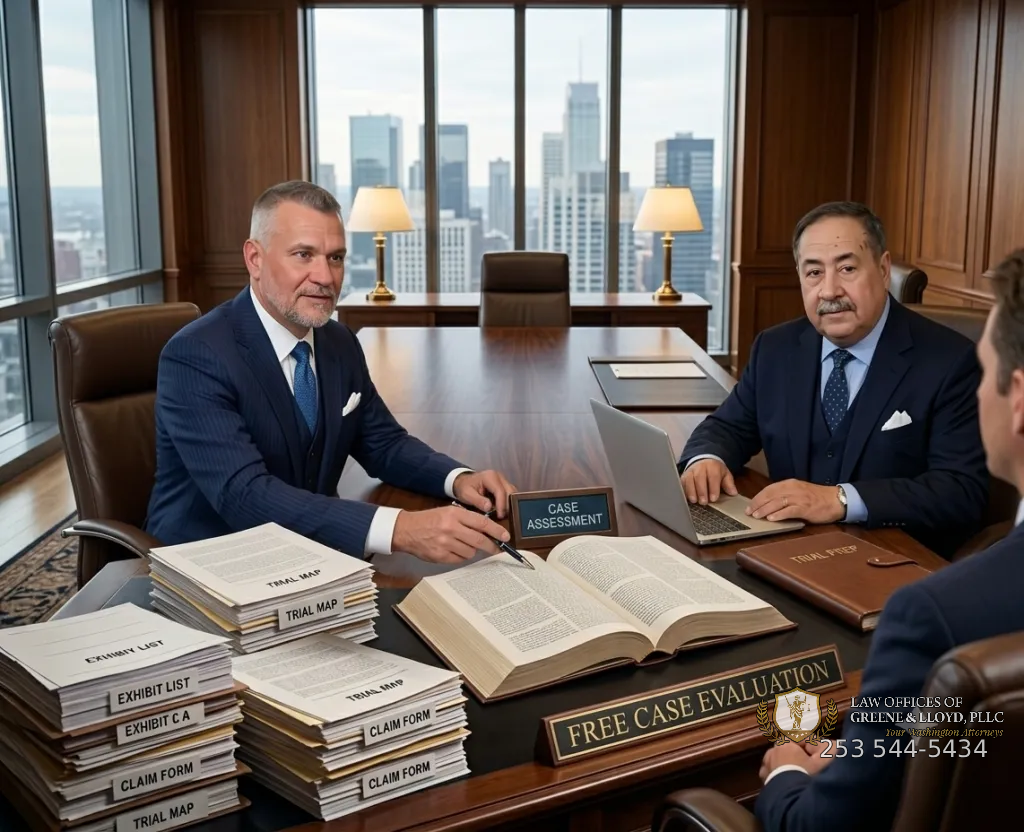
No Cost · No Obligation · Available 24/7
Free Case Evaluation
Before you talk to the insurance company, talk to us. A free case evaluation with attorneys Rob Lloyd and Tim Greene gives you a clear, honest picture of whether you have a viable claim, what it's worth pursuing, and what to do next — with no cost, no obligation, and no pressure to hire anyone.
South Hill office, Puyallup · Serving all of Pierce County · Available 24/7
FreeNo cost, no obligationAvailable 24/7
3 yrsWashington filing deadlineRCW 4.16.080
No feeUnless we recover for youContingency representation
What's CoveredCases We Evaluate at No Charge
Rob Lloyd and Tim Greene personally handle evaluations across the full range of personal injury cases. The types of incidents we see most often from Puyallup and Pierce County residents include:
- Car, truck, and motorcycle accidents — including crashes on Meridian Ave and Hwy 512, hit-and-runs, and commercial vehicle wrecks.
- Rideshare collisions — Uber and Lyft accidents involve layered insurance coverage that changes depending on the driver's status at the time of the crash.
- Traumatic brain injury (TBI) — from any kind of accident; TBI symptoms can be subtle and delayed, making early evaluation important.
- Wrongful death — when a family has lost someone due to another party's negligence.
- Slip and fall and premises liability — injuries on someone else's property.
- Defective products, construction injuries, dog bites, and other personal injury matters.
If your situation isn't on this list, call anyway. The evaluation costs nothing, and the worst outcome is that we tell you your situation is something you can handle on your own.
What HappensWhat a Free Case Evaluation Actually Looks Like
We know "free consultation" can feel like a sales call in disguise. This is how ours actually works:
- You reach us by phone or request a callback — available 24/7, so you don't have to wait for business hours after an accident.
- We listen to what happened — the incident, your injuries, the medical care you received, and any contact you've had with insurance companies.
- We ask a few focused questions — about witnesses, documentation, and the timeline of events.
- We give you a candid assessment — whether we think you have a viable claim, what the legal process would look like, and what evidence matters right now.
- You decide what to do next — with no pressure from us. If we take your case, we explain the representation terms. If we don't think legal representation adds value for your situation, we tell you that plainly.
If you'd prefer to meet in person, our South Hill office on South Meridian is a short drive from Good Samaritan Hospital and the surrounding Puyallup area.
TimingWhy Washington's Deadline Makes the Evaluation Time-Sensitive
The legal deadline isn't usually what creates urgency — it's everything that disappears before it arrives.
Washington's three-year filing deadline
Most personal injury claims in Washington must be filed within three years of the date of the injury (RCW 4.16.080). Three years sounds like a long time, but the practical evidence window is far shorter: surveillance footage gets overwritten in days, physical evidence changes or disappears, and witnesses become harder to locate. Getting an evaluation early means those things can be preserved.
The other timing consideration is insurance. Adjusters often contact accident victims quickly after an incident with settlement offers designed to close the claim before the full extent of injuries is known. Signing a release — even for a seemingly fair amount — is typically permanent. An evaluation before you sign anything is the single most useful thing you can do.
Be HonestWhen You May Not Need a Full Legal Claim
A minor fender-bender with no injury, clear fault, and an insurer who has already offered a fair repair — that situation often doesn't need an attorney, and we'll tell you so. If you've already resolved everything to your satisfaction and signed a release, there typically isn't anything to reopen.
Two things are worth knowing before you decide to handle something yourself:
Delayed symptoms are real
Soft-tissue injuries, concussions, and internal damage frequently don't produce full symptoms until days after an accident. What feels minor on the day of the crash can become significant within a week. A free evaluation costs nothing and confirms whether your situation is genuinely self-handleable or whether you're missing something.
Partial fault doesn't end your claim
Washington follows a pure comparative fault rule (RCW 4.22.005). Even if you were partly at fault, you can still recover — your compensation is reduced by your percentage of fault rather than eliminated. If you're not calling because you think you were partly to blame, that assumption may be costing you.
This page provides general information about Washington law and is not legal advice. The rules and deadlines that apply depend on the specific facts of your case; contact us to discuss your situation.
What to BringCome Prepared — or Don't Worry About It
Having documentation ready helps, but don't let the absence of paperwork stop you from calling. We can work with whatever you have at the time of the evaluation. If you do have any of the following, bring or have them ready:
- Any police report, incident report, or animal control report.
- Medical records or bills from treatment received, including at Good Samaritan or any urgent care.
- Photos of the scene, vehicle damage, or your injuries.
- Insurance information for all parties involved.
- Names and contact details for any witnesses.
- Any correspondence from insurance adjusters, including settlement offers.
Common Questions
Free Case Evaluation FAQ
What happens during a free case evaluation in Puyallup?
You speak directly with attorney Rob Lloyd or Tim Greene. We ask about how your injury happened, what medical care you received, what insurance contact you have had, and what documentation you have. We then give you a candid assessment of whether you have a viable claim, what the process looks like, and what your next steps are — at no cost and with no obligation to hire us.
Is a free case evaluation really free, with no obligation?
Yes. There is no charge for the consultation, no obligation to hire Greene & Lloyd, and no pressure to make a decision on the call. If we think you have a viable claim we'll explain why; if we think the situation doesn't warrant legal representation, we'll tell you that too.
How long do I have to file a personal injury claim in Washington?
In Washington, most personal injury claims must be filed within three years of the date of the injury (RCW 4.16.080). The practical urgency is often earlier — physical evidence, surveillance footage, and witness accounts fade well before that deadline.
Do I need a lawyer for a minor accident on Meridian Ave or Hwy 512?
Not always. A fender-bender with no injury, clear fault, and a cooperative insurer can often be handled directly. But delayed injury symptoms, comparative fault disputes, and insurance company tactics can turn a seemingly minor situation into a more complex one — which is why a free evaluation costs nothing and can confirm where you stand.
Can I still recover damages if I was partly at fault for my accident?
Yes. Washington follows a pure comparative fault rule (RCW 4.22.005), so your recovery is reduced by your percentage of fault rather than eliminated. Being partly at fault does not end your claim.
What should I bring to my case evaluation?
Bring or have ready: any police or incident report, medical records and bills from treatment received, photos of the scene or your injuries, insurance information for all parties, and notes about what happened while the details are fresh. We can work with whatever you have.
Get a Free Case Evaluation in Puyallup
Talk to an attorney before you talk to insurance.
A free evaluation with Rob Lloyd or Tim Greene costs nothing, takes no obligation, and could make a significant difference in what you recover. Available 24/7.
The Law Offices of Greene & Lloyd, PLLC
4115 S Meridian Ste B, Puyallup, WA 98373(253) 544-5434 · Free consultation 24/7
Serving
Puyallup · South Hill · TacomaAll of Pierce County, Washington
The information on this page is provided for general informational purposes only and does not constitute legal advice, nor does it create an attorney-client relationship. Statutory references describe general Washington law and may not reflect the specific facts or deadlines of your situation. Consult a licensed Washington attorney about your individual case. Prior results do not guarantee a similar outcome.
