
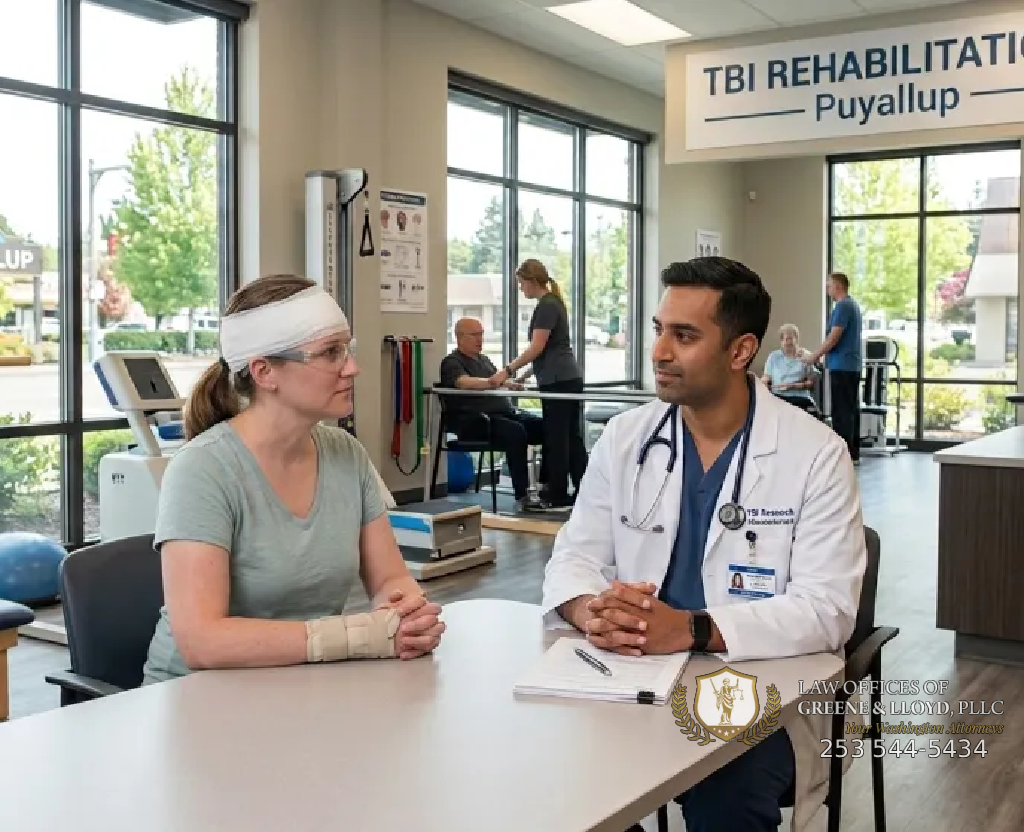
Practice Area — Traumatic Brain Injury
Traumatic Brain Injury Attorney
TBI symptoms are often subtle, delayed, and easy to miss in the first days after a crash or fall — which is exactly why settling quickly is the most common and most damaging mistake in these cases. Attorneys Rob Lloyd and Tim Greene focus on traumatic brain injury litigation specifically because the difference between adequate representation and generic intake matters more here than almost anywhere else in personal injury law. Free, confidential, available 24/7.
Serving Puyallup, South Hill & all of Pierce County · Free consultation available 24/7
No capOn non-economic damages in WashingtonSofie v. Fibreboard (1989)
Don't signUntil the medical picture is stableReleases are permanent
No feeUnless we recover for youContingency representation
Warning SignsTBI Symptoms That Can Surface Days After an Accident
The most dangerous aspect of traumatic brain injury in a personal injury context isn't the severity — it's the delay. A person who felt "fine" at the scene of a crash, walked away without visible head injury, and declined ambulance transport can still have a significant TBI that only becomes apparent days later.
Symptoms to watch for in the days and weeks following any head impact or violent movement of the head:
- Headaches that persist, worsen, or emerge after a delay
- Dizziness, balance problems, or a feeling of fogginess
- Nausea, particularly without a clear cause
- Sensitivity to light or noise that wasn't present before
- Difficulty concentrating, remembering, or following conversations
- Sleep disturbances — sleeping far more or less than usual
- Mood changes — increased irritability, anxiety, or emotional volatility
- Slowed thinking or difficulty finding words
Get medical evaluation even if imaging is normal
Mild TBI and concussion frequently don't appear on standard CT or MRI scans. A normal imaging result does not mean no injury — it means the injury may not be detectable by those tests. Neuropsychological evaluation, clinical assessment by a specialist, and documented symptom history all contribute to establishing a TBI claim even when imaging is clear.
The Biggest MistakeWhy Settling a TBI Claim Too Early Is So Costly
Insurance companies know TBI symptoms are delayed. Their interest is in closing the claim before the full extent of the injury becomes clear — which is precisely why quick settlement offers in the first weeks after a crash are so dangerous in head-injury cases.
A release is permanent — even if you get worse
Once you sign a settlement release, the claim is closed. If your cognitive difficulties worsen over the following months, if you develop chronic post-concussion syndrome, if you need specialist care that wasn't anticipated — those future costs and losses come out of your own pocket. The insurer owes you nothing more. Settling before the medical picture is stable is the most common and most costly mistake in TBI cases, and it's the one Greene & Lloyd is specifically focused on preventing.
We generally recommend that TBI clients do not accept any settlement offer until a specialist evaluation is complete and the prognosis is reasonably stable. That position costs us time — but it's the right approach for the client, and it's what actually makes these cases work.
Common CausesHow TBI Happens in Puyallup Personal Injury Cases
Any incident that causes a violent movement or impact to the head can produce a TBI — and the most common causes in Pierce County personal injury claims are:
- Vehicle collisions — car, truck, and motorcycle crashes on corridors like Meridian Ave, Hwy 512, Canyon Road, and SR 167. Whiplash-type forces can cause TBI even without direct head impact.
- Pedestrian and bicycle accidents — impacts with vehicles where the head strikes the vehicle, the road, or another surface.
- Falls — slip and fall incidents, falls from height on construction or work sites, and stair falls.
- Workplace incidents — struck-by injuries, falling objects, equipment incidents.
- Daycare and school injuries — head impacts from falls and rough handling, where delayed and subtle symptoms in children require particular attention.
- Sports and recreational accidents — where TBI is increasingly recognized even in non-contact situations involving sudden deceleration.
Washington LawNo Cap, Comparative Fault & the Deadline
Washington has no cap on non-economic TBI damages
The Washington Supreme Court struck down the state's cap on non-economic damages in Sofie v. Fibreboard Corp., 112 Wn.2d 636 (1989). The cognitive, emotional, and quality-of-life losses from a TBI — which are often far more significant than the medical bills — are not limited by statute. A jury can award what the evidence supports. This is why building a thorough, well-documented TBI claim matters: there's no artificial ceiling on what it can be worth.
Three years — but pursue early, not late
Washington's general personal injury deadline is three years from the date of injury (RCW 4.16.080). In TBI cases, the practical reason to act early isn't the deadline — it's that scene evidence fades fast, and contemporaneous medical documentation of early symptoms is far more valuable than reconstructed accounts months later. Get a legal evaluation early, even if you're still in the medical treatment phase.
Partial fault doesn't end a TBI claim
Washington's pure comparative fault rule (RCW 4.22.005) means your recovery is reduced by your share of fault — not eliminated. In TBI cases, insurers sometimes overstate a claimant's fault specifically to reduce a high-value claim. Expert liability support is as important as expert medical support on these cases.
This page provides general information about Washington law and is not legal advice. The rules and deadlines that apply depend on the specific facts of your case; contact us to discuss your situation.
What We DoTBI Litigation at Greene & Lloyd
TBI cases require a different approach than a standard vehicle-crash claim. The injury isn't visible, symptoms evolve, and the defense narrative — "there's nothing on the scans" — is predictable and needs to be answered with documented specialist evaluation and neuropsychological testing.
- Early specialist referral — we connect clients with neurologists and neuropsychologists to establish a proper TBI evaluation and documented baseline early in the case.
- Thorough medical record collection — every treatment record from every provider, from the emergency room through ongoing care.
- Life-impact documentation — journals, employer statements, family accounts of how the injury has changed daily function and quality of life.
- Expert support — medical and neuropsychological experts who can explain the injury, the prognosis, and the impact to a jury in terms that make sense.
- Patience on timing — we don't push toward settlement before the medical picture is stable, even though that takes longer.
We handle TBI claims on a contingency-fee basis — no attorney fee upfront, a fee only if we recover for you. You work directly with Rob Lloyd and Tim Greene throughout.
Common Questions
Traumatic Brain Injury Claim FAQ
What are the signs of a traumatic brain injury after a car accident?
TBI symptoms after a crash include persistent or worsening headaches, dizziness or balance problems, nausea, sensitivity to light or noise, difficulty concentrating or remembering, sleep changes, mood changes or increased irritability, and slowed thinking. Critically, these symptoms can emerge days or even weeks after the injury. Any of these after a head impact warrants immediate medical evaluation.
Why should I not settle a TBI claim quickly?
Because the full picture of a TBI often isn't clear for weeks or months after the injury. Symptoms can evolve significantly after an initial insurer contact or a quick settlement offer. Once you sign a release, the case is closed permanently — even if your condition worsens. Settling before the medical picture is stable is the most common and most costly mistake in TBI cases.
Is there a cap on TBI damages in Washington?
No. Washington does not cap non-economic damages. The Washington Supreme Court struck down the state's cap in Sofie v. Fibreboard Corp., 112 Wn.2d 636 (1989). Pain, suffering, and the cognitive and emotional impact of a TBI are not limited by statute — a jury can award what the evidence supports.
How long do I have to file a TBI claim in Washington?
Three years from the date of the injury in most cases (RCW 4.16.080). But TBI claims should be pursued well before that deadline — scene evidence fades quickly, and early medical documentation of symptoms is important to the claim. Don't wait for symptoms to fully develop before getting a legal evaluation.
What if my TBI doesn't show up on imaging?
Mild TBI and concussion frequently don't appear on standard CT or MRI scans. A normal imaging result does not mean no injury. Neuropsychological testing, clinical evaluation by a specialist, and documented symptom history are all relevant to establishing a TBI claim even when imaging is normal.
How are TBI attorney fees structured?
On a contingency-fee basis. You pay no upfront attorney fee, and a fee is owed only if we recover compensation for you. Your initial consultation is free.
Talk to a Puyallup TBI Attorney
If you hit your head, don't sign anything until a specialist has evaluated you.
Traumatic brain injury is the injury category where settling too early causes the most permanent financial harm. Greene & Lloyd takes the time to build these cases right. Your case review is free, confidential, and available 24/7.
The Law Offices of Greene & Lloyd, PLLC
4115 S Meridian Ste B, Puyallup, WA 98373(253) 544-5434 · Free consultation 24/7
Serving
Puyallup · South Hill · TacomaAll of Pierce County, Washington
The information on this page is provided for general informational purposes only and does not constitute legal advice, nor does it create an attorney-client relationship. Case citations and statutory references describe general Washington law and may not reflect the specific facts or deadlines of your situation. Consult a licensed Washington attorney about your individual case. Prior results do not guarantee a similar outcome.
